Roblox
Design a Roblox Simulator with AI: A Progression Loop That Makes Sense
Plan a Roblox simulator around gathering, depositing and one meaningful upgrade. Learn what belongs on the server and how to test the first loop in Studio.
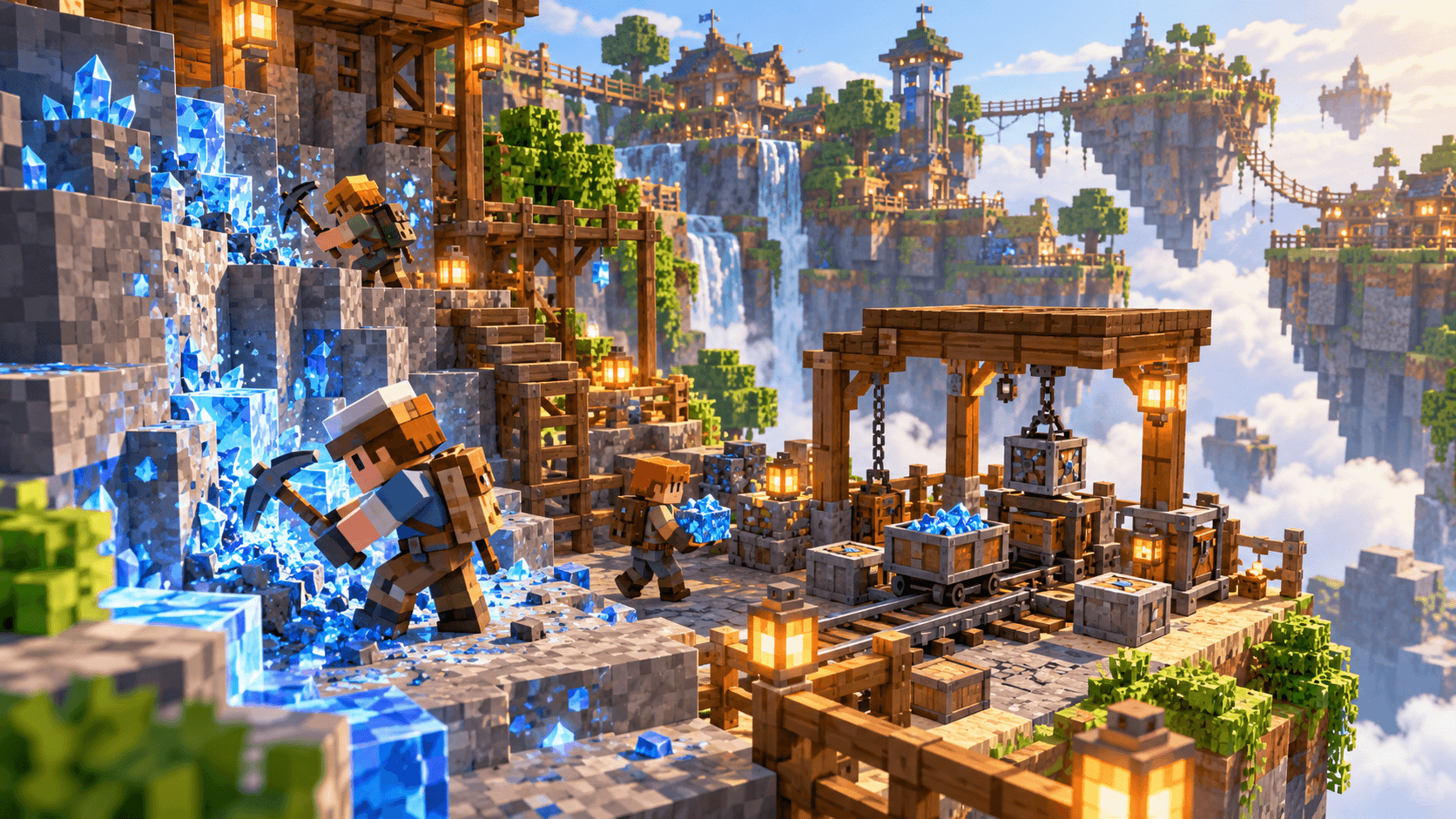
A simulator needs a reason to repeat its main action. Gathering resources, depositing them and buying an upgrade can work as a first loop if the upgrade changes how the next run feels. Large numbers and many purchase buttons do not create that improvement by themselves.
For a first Roblox brief, use one quarry, one resource and one backpack upgrade. Buildr can prepare native project material, but the actual game must be imported and tested in Roblox Studio. A website scene preview does not prove multiplayer behavior or saved progression.
Decide what the player repeats
Write one cycle: mine crystal, fill a small backpack, return to the deposit station, earn coins, buy a larger backpack. Then identify the friction and reward. The trip back to the station creates a choice about when to deposit; the larger backpack changes how long the next trip can last.
Keep the first cycle short enough to observe several repetitions in a playtest. If the first upgrade takes twenty minutes, you will learn little from a brief test. Starting values should make the mechanic visible, then change based on the actual pacing.
Keep one source of truth for rewards
In Roblox, the client can show input and feedback, while the server should validate actions that affect shared or valuable game state. The Roblox client-server boundary documentation explains why input from clients needs validation.
For the quarry, the server should confirm that the player is close enough to a valid resource, has capacity and meets the action's timing rule. It should compute the reward instead of trusting a client-supplied coin amount. Include this expectation in the generation prompt and review the produced code.
| State | First-version rule | Test |
|---|---|---|
| Backpack contents | Cannot exceed capacity | Mine when the backpack is full |
| Deposit | Pays for resources actually carried | Trigger deposit twice quickly |
| Coins | Server validates changes | Try an unaffordable purchase |
| Upgrade | Costs coins once and changes capacity | Repeat the purchase action |
A scoped simulator prompt
Prepare a Roblox Studio prototype of an original crystal-quarry simulator. Include one quarry zone, mineable crystals, a deposit station and one backpack-capacity upgrade. Players begin with capacity 10; gathering one valid crystal adds one resource. Depositing exchanges carried resources for coins and clears the backpack once. Keep resource rewards, coin balances and upgrade validation on the server. Validate distance, cooldown and capacity before accepting a mining request. Show backpack fill, coin balance and clear full-capacity feedback. Provide a tidy Explorer hierarchy and separate client feedback from server rules. Keep the first prototype session-only; do not imply persistent saving until it is explicitly implemented and tested.
This brief intentionally makes saving a later milestone. Silent placeholder saving is worse than a clearly labeled session prototype. If you add persistence, handle failures and test reconnects in an appropriate published test environment.
Test with more than one player
Studio's testing modes let you inspect client and server behavior. Start with a solo test, then use multiple clients to check whether players incorrectly share backpacks, coins or upgrade state.
Have both players approach the same crystal. Decide whether that resource is shared or independently available, then confirm the implementation matches. Deposit while another player mines. Watch for duplicate rewards and state that appears on one client but not another.
Make the upgrade change the experience
Measure how many trips it takes to reach the first purchase and how the purchase changes the next run. A useful upgrade should be noticeable without requiring a spreadsheet. If the player still performs exactly the same steps at exactly the same pace, the upgrade may be cosmetic.
Add a second zone only after this loop works. New zones can introduce a route choice or a different gathering constraint. Repeating the same quarry with a new color and a larger price is a weaker expansion.
Bring the verified loop back into the brief
Use the Roblox AI builder guide for Studio handoff and the tycoon guide for a different progression structure. Open Buildr, choose Roblox, and describe the first cycle. Paid generation requires model access and credits. Test the native result before presenting it as a complete multiplayer experience.
YOUR NEXT BUILD