Game design
Design a Game HUD with AI: Show What Players Need at the Right Moment
Plan a readable game HUD around objective, health and action feedback. Includes a compact prompt and responsive playtest checklist.
A HUD should answer a question the player has right now. Where am I going? How much health remains? What action is ready? If every possible value is always visible, important feedback becomes harder to notice.
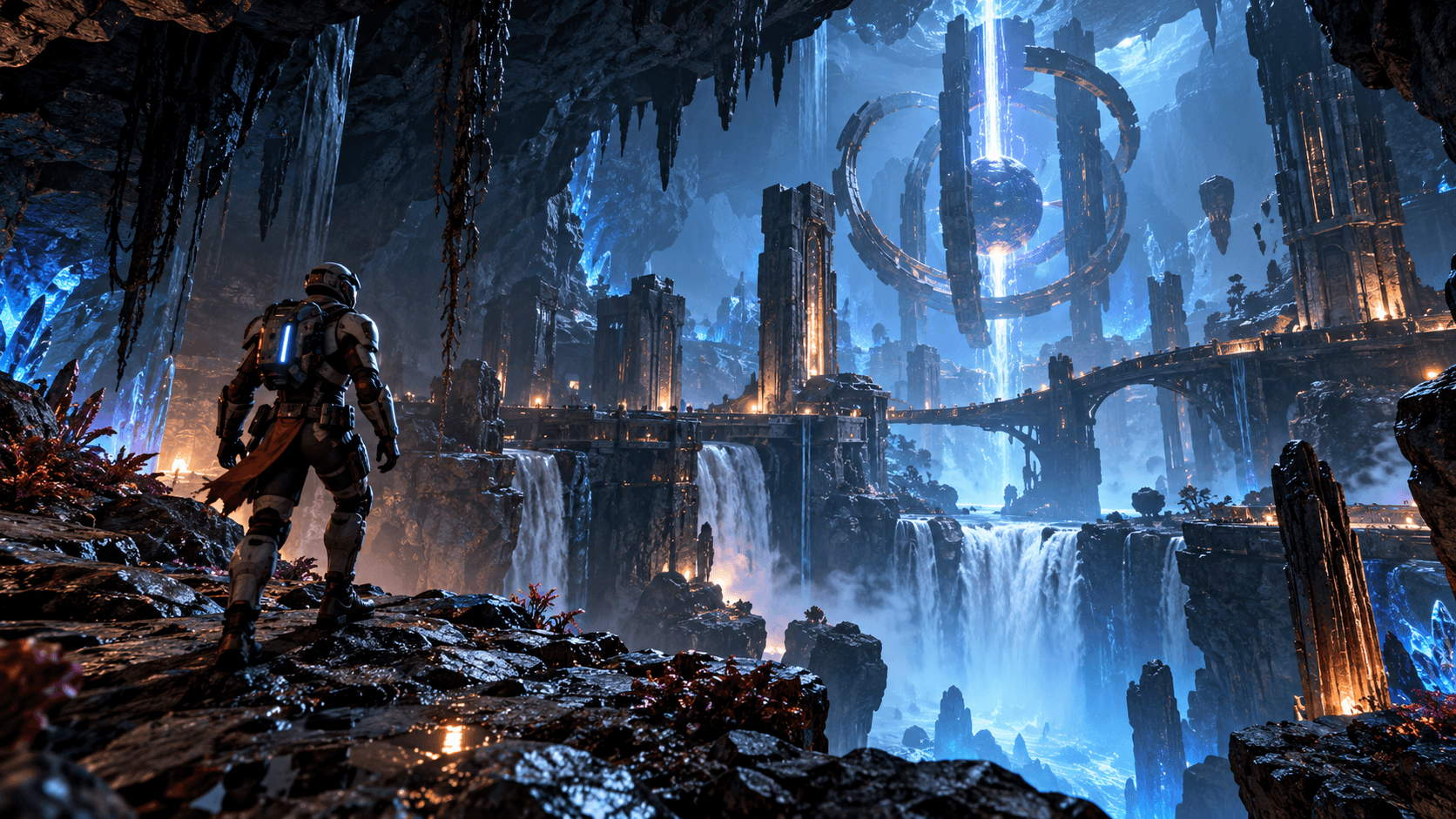
Design the screen around the game loop, then ask AI to implement only the information that supports that loop. The cover is an original concept illustration with no interface text; it is a composition reference, not a captured product screen.
List decisions before counters
Write the decisions players make during one minute of play. A runner may need distance and ability cooldown. A puzzle may need objective state and reset. A survival game may need health, wave and remaining time. Remove values that do not change a decision.
Keep action feedback close to the action when possible. A damage flash belongs near the character; a long-term objective can live in a stable corner. This helps players connect cause and result.
| Information | Show when | Test |
|---|---|---|
| Objective | It changes or needs attention | Player can state the next goal |
| Health | Damage or recovery occurs | State is readable at a glance |
| Ability | Available, used or cooling down | Player can predict readiness |
| Score or time | It affects the current choice | Counter does not cover play |
Keep the center playable
Reserve the central play area for movement and interaction. Place persistent information in corners with enough contrast against the scene. On mobile, increase touch targets and reduce simultaneous labels rather than shrinking everything until it is unreadable.
Do not rely on color alone. Add an icon shape, progress motion or text label where the state matters. Test a dark cavern, a bright sky and a busy combat scene to find where the HUD disappears.
A HUD brief for a first action game
Design a compact responsive HUD for an original browser action game. Keep the center of the play area clear. Show the current objective in the upper-left, health with a clear bar and numeric fallback, and one ability cooldown near the lower-right action area. Show feedback when damage is taken, the ability is activated or the objective changes. Support keyboard and touch layouts without covering the player or goal. Keep labels short and use shape plus contrast instead of color alone. Include Pause and Restart states. Preserve the existing game rules and do not add new progression systems.
This separates presentation from game rules. If a value is not backed by a real state, do not add it as decorative text. A HUD should report what the game knows.
Test in motion and at different sizes
Play while looking at the game rather than the interface. Ask a tester to describe the current objective after a few seconds. Resize the browser, rotate a phone and trigger every feedback state. Confirm that pause, restart and win screens do not leave stale HUD values behind.
Read better prompts for precise UI behavior, mobile controls for small screens and debugging for stale-state reports. Use Buildr for a targeted HUD revision and verify it in the destination game.
YOUR NEXT BUILD